
Choosing the Right UAV Motor and Servo Setup
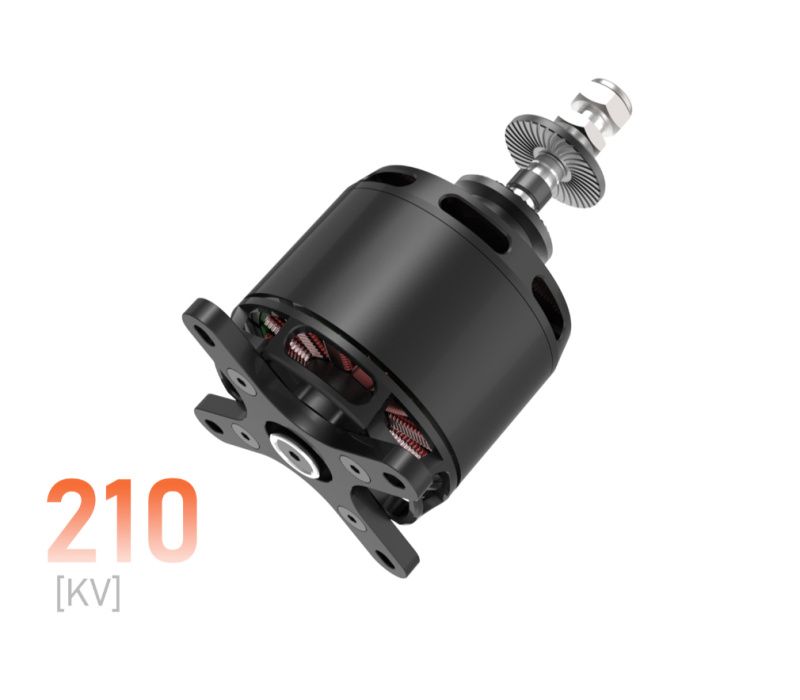
Purchasing for drone propulsion and motion control is not just about raw power. For developers and procurement teams, the best fit depends on how a motor and servo will behave under real flight loads: thrust-to-weight targets, vibration tolerance, dynamic response, thermal stability, and the mechanical space available inside the airframe. Kpower Technology Co. Expands Kpower Technology Co. Expands UAV Motor and Servo Solutions for Drone Power Motors and FPV Racing Drone Motors UAV Motor and Servo Solutions for Drone Power Motors and FPV Racing Drone Motors is positioned for buyers who need consistent performance across different drone power motor requirements, as well as precise auxiliary control where servos must hold accuracy while responding quickly to changing commands.
Buyer Checklist for Matching Motors to Flight Requirements
Before selecting components, define the performance envelope and integration constraints. Start with voltage compatibility and expected operating conditions, then confirm the motor’s KV range and how it maps to your propeller selection and desired RPM. For competitive platforms, prioritize brushless motor design features that support rapid instantaneous acceleration and stable power delivery during high-intensity flight regimes. Also evaluate mechanical packaging: compact dimensions and efficient internal structure help reduce overall system mass while preserving mounting flexibility. Finally, confirm whether your application benefits from customized drive system tuning, especially when thrust output, integration clearances, and control-loop response must align precisely.
Servo Options That Support Precision Motion Control
For gimbals, stabilization mechanisms, payload positioning, steering adjustments, and other precision aerial mechanisms, servo selection is equally critical. Look for a servo lineup that covers the control and durability needs of your subsystem: brushless servos and coreless servos for responsive motion, digital servos for repeatable control, micro servos for tight spaces, waterproof servos for harsher operating environments, and high-torque industrial servos when load handling matters most. Communication protocol compatibility also affects integration speed—buyers should confirm support for common control methods such as PWM, UART-TTL, RS-485, and CAN-bus. This reduces engineering time by allowing direct alignment with flight controllers and motion control electronics.
Conclusion
For teams comparing propulsion and motion-control suppliers, the most reliable approach is to select based on system-level fit: power characteristics, compact packaging, protocol compatibility, and the ability to support customized drive requirements. Kpower’s expanded ecosystem is designed to help buyers move from component selection toward scenario-adaptive integration, supported by standardized quality management and end-to-end engineering support. If you want a procurement path that balances performance and manufacturability, explore options and technical guidance through kpower.com to streamline motor and servo matching for both drone power motors and high-precision FPV racing drone builds.

